Tuesday, 17 September 2024

Cheetah


This week’s big cat is the fastest animal on Earth, the cheetah is unique in many ways, it kinda looks like a large muscular greyhound with its sleek body and long thin, powerful legs.  An adult can run up to 113km/h or 70 mph.  They have large nasal passages allowing them to breathe easy while running.

They like to live in dry areas like the bush lands of Savanah and the semi-deserts, they feed on gazelles, impala, wildebeests and zebras. They like to hunt during the day, following a herd from a distance then selecting and old, an injured or a young victim, it will chase its victim and usually catches it on its first attempt. Its powerful jaw muscles enable it to tightly hold and suffocate its prey.

Most males prefer to live alone and will claim and make an area as their own.  Their paws are more like dogs then a cats being narrow and hard padded and non-retractable like a cats which allows for better grip while running.

They can be as long as 1.5 metres or 3.5 feet, as tall a 1 metre or 3 feet they weigh about 45-65 kilos or 99-143 pounds, they have a life span of 12-14 years, females usually have between 2 and 4 cubs at a time.


Unlike other big cats they don’t roar but purr, they also make high pitched yelps and barks as well as moan and bleat. They have a tawny to creamy white or pale buff fur that is marked with evenly spaced, solid black spots. The head is small and rounded, with a short snout and black tear-like facial streaks. 

Cheetahs are in the “vulnerable” category and are at risk of extinction in the wild. They face a number of threats, including losing their prey and habitat to human activity, human-animal conflict, and illegal animal trade. Less than 100 animals live in East Africa, less than 2,000 in Sudan, and fewer than 500 live in Northeast Africa. The total number of cheetahs in the world is estimated to be approximately 6,517 mature individuals.


Monday, 16 September 2024

Czech Republic


This week we are in Central Europe which is the region lying between the defined areas of Eastern and Western Europe. It includes the countries of Estonia, Latvia, Lithuania, Poland, Slovakia, Czech Republic and Hungary.

So, this week we will start with the Czech Republic, also known as Czechia, is a landlocked country in Central Europe. Historically known as Bohemia, it is bordered by Austria to the south, Germany to the west, Poland to the northeast, and Slovakia to the southeast. 

The country was once known as Czechoslovakia but in November 1989, the Velvet Revolution ended communist rule in the country and restored democracy. On 31 December 1992, Czechoslovakia was peacefully dissolved, with its constituent states becoming the independent states of the Czech Republic and Slovakia.


It has a population of around 10.7million, the capital is Prague, and the official language is Czech.

The koruna, or crown, has been the currency of the Czech Republic since 1993. The koruna is one of the European Union's eight currencies, and the Czech Republic is legally bound to adopt the euro in the future. The official name in Czech is koruna česká.

The Czech National Bank, is the central bank and financial market supervisor in the Czech Republic, headquartered in Prague. It is a member of the European System of Central Banks.


The flag of the Czech Republic is the same as the flag of the former Czechoslovakia. Upon the dissolution of Czechoslovakia in December 1992, the Czech Republic kept the Czechoslovak flag while Slovakia adopted its own flag. The first flag of Czechoslovakia was based on the flag of Bohemia and was white over red. It was created in 1920, shortly after the founding of the first independent Czechoslovak state. The white, red, and blue colors are both symbolic and historic.


The coat of arms of the Czech Republic is divided into two principal variants. Greater coat of arms displays the three historical regions—the Czech lands—which make up the nation. Lesser coat of arms displays lone silver double-tailed lion in red shield. The Czech coat of arms dates back to the 13th century. It consists of a shield divided into four squares. The top left and bottom right squares are red, with a white, double-tailed crowned lion. The lion is the symbol of Bohemia and signifies power and sovereignty.


Its national bird is I think the female eagle, and its national flower is the rose and the lion is the national animal.


It is considered a relative safe country with violent crime low but petty crime exists as it does in all countries.

Many Czech’s speak English, German and Russian.


Sunday, 15 September 2024

Week 37 of 2024


I had a mostly good night, had to get up at 11pm to use the powerfit due to how much my legs were moving, after that I went back to bed and straight off back to sleep.

This morning, I took my meds at 5am and went back to bed till 6am. It is 16 degrees and my BGL was 6.1

I made a couple of slices of toast for breakie but only managed to eat one and I had my morning egg flip.

Tim and I went shopping and by the time I got home I was exhausted.

Steps: 4,225

I had a mostly good night, had to get up at 11pm to use the powerfit due to how much my legs were moving, after that I went back to bed and straight off back to sleep.

This morning, I took my meds at 5am and went back to bed till 6am. It is 16 degrees and my BGL was 6.1

I made a couple of slices of toast for breakie but only managed to eat one and I had my morning egg flip.

Tim and I went shopping and by the time I got home I was exhausted.

Steps: 4,225

I had a mostly good night, had to get up at 11pm to use the powerfit due to how much my legs were moving, after that I went back to bed and straight off back to sleep.

It is only 8 degrees and my BGL was 4.4.

It warmed up, got to 23 degrees.

I managed to close my eyes for an hour before I had to pee. I should have closed them again after I went to the loo.

I have managed to stay awake till 7pm but found myself extremely tired so I am off to bed.

Steps: 4,586

KATHY’S BIRTHDAY SHE IS 39 TODAY

I had a good night slept straight through till 5am. It is only 9 degrees and my BGL was 5.0

By 9am it was a nice 15 degrees, and it reached a top of 20 degrees.

I had a 1hr nap, but I am going to try and increase it to 1.5hrs tomorrow, I am feeling exhausted and tired at 7pm but will manage to stay up till 7.30pm.

Steps: 4,109

Another good night woke twice to pee and straight back to sleep. It’s 8 degrees and my BGL was 5.1

I had to change into shorts as it is warm.

I had my knee braces on but after 4 hours they started to annoy me, so I took them off.

It’s 11.30pm and I am up using the powerfit due to restlessness.

Steps:3,345

Had a so-so night after using the powerfit I went back to bed at midnight and straight back to sleep till the alarm went off.

It is only 7 degrees and my BGL was 4.9, the day warmed up a bit got to a top of 16 degrees.

It started to rain this afternoon after Sam got home from school.

I am managing to stay up a bit longer at night, it is 8.15pm and I am off to bed.

Steps:2,989

Had another so-so night, I kept waking up for a few minutes and this is why I suspect I woke up tired. The temp is 12 degrees my BGL was 4.5 and I am in winter clothes.

Damn it felt cold when Sam and I went to wait for Joel (transport driver)

Tasha drove me to Miller’s bakery so I could get a couple of things.

A cold day but no rain which is something.

Steps: 2,861

Had a good night went to bed around 8.15pm slept till 3am after going to the loo I went back to bed and slept till 5am when the alarm went off.

A somewhat cold start to the day with the temp being only 6 degrees and my BGL was 5.5

Tim is working today all day he expects to be home around 6pm. He arrived home at 6.30pm.

Tasha, Jessica and I walked down to vote, I took the walker and felt exhausted by the time I got home.

Steps: 3,106


Friday, 13 September 2024

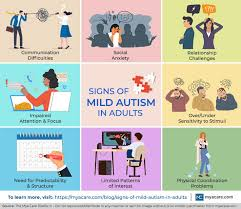
Autism in adults


When we think of autism, we generally think of children, but adults may recognise the signs of autism in themselves often this will happen once their child is diagnosed with being on the autism spectrum.

So, it is not surprising that many autistic adults are undiagnosed.

Historically, autism was generally identified in children and predominantly in males. These days we have a better understanding of autism and its presentation across genders. This has led to better recognition of signs that could indicate a person is autistic.

Recognising the signs of autism as an adult often comes through personal reflection. You may initially learn about autism through a family member or a friend who has been diagnosed. You may identify with their personal journey and feel a connection with them.

Seeking and undertaking a formal diagnosis is very much a personal choice. Some adults may want to get a diagnosis, but others will think what’s the point at my age. Being diagnosed can be helpful when someone is trying to work to their personal strengths. It can also bring a sense of relief, recognising that you are just different and not defective or broken.

Learning more about yourself and autism will be beneficial whatever pathway you choose.


There are two distinct pathways when seeking an adult diagnosis. Assessments can be conducted by a psychologist, or by a psychiatrist, with experience in assessing autism.

Both will conduct some form of standardised testing for autism and other conditions, such as ADHD or mood disorders, and provide you with a report.

However, there are some differences between the services and support they can provide. A report from a psychiatrist may not be as detailed as one from a psychologist.

Ensure you ask upfront what is entailed in the assessment and report process.


Wednesday, 11 September 2024

El Alamein


It’s the middle of the week and we are back in the year 1942 and while the 6th Australian Division walked out of steaming jungle into the deserted village of Kokoda, the 9th Australian Division were under fierce fire on the hot desert sands of Egypt.

This post is about the battles at El Alamein, the first was in July 1942 which ended with an up in the air result and neither side being the clear victor.

Then between 23 October to the 5 November saw another battle and the axis army on a retreat they didn’t recover from.

The Battle of El Alamein was the last great imperial battle. More than 13,500 men in the Eighth Army were killed, wounded or missing including 2,694 Australians from the 9th Division, approximately one-fifth of the Eighth Army's total casualties.


El Alamein was an obscure railway siding on the line from Alexandria. It was between the sea and an impassable swamp of the Qattara Depression. It was also the last defendable position before the Suez Canal 320 kilometres (199 miles) away.

The Aussies had been fighting in the European, Middle Eastern, and North African theatres of the war since 1940. During most of 1942 RAAF squadrons were active in the area providing air-cover for the various battles fought in the area.

From June to November 1942 the AIF and RAAF would play an important role in the battles and victory at El Alamein.

The purpose of the fighting in North Africa was to prevent the Axis powers from threatening Alexandria and the Suez Canal.


In 1941 with the arrival of the German General Erwin Rommel things most of the Allies gains in the area were lost to the Germans. After heavy fighting to Benghazi the Allies had fallen back to Tobruk, were Rommel held the 9th Australian Division under siege for ten months. The besieged men were referred to as trapped rats by Lord Haw Haw and the Aussie’s took pride in the name the Rats of Tobruk.

In an amazing logistical operation during the nights of September and October 1941, destroyers and cruisers slipped into the port and evacuated 15,000 Aussie troops, sadly at the end of October some of the evacuation convoys were bombed resulting in heavy casualties. Also, some Aussie infantry troops were standard at Tobruk leaving by road on 16 December.


Events outside the desert war in North Africa diverted Aussie troops and equipment elsewhere and even though the United States entered the war after Pearl Harbour and their presence was welcomed it became obvious that the need to defend Australia was realised. This led to the withdrawal of Australian troops from the middle east.

More next week.

Tuesday, 10 September 2024

Leopards


Hey everyone, it is Tuesday here down under and time to look at another big cat, this week it is the Leopard.

Leopards are the third largest big cat; they are excellent climbers and unlike most other wild cats’ love living in trees. They can live in various different habitats and have a wide range of prey. They are generally found in the Saharan regions of Africa as well as Asian countries like Turkey, Korea, Jave and India.

They are easily recognised by their rosette patterned coat and their extremely long tail which is darker in colour then the rest of their body. Although their base coat can vary depending on its habitat, those living in open grasslands are a golden yellow, while those living in deserts are yellow or cream in colour. Then there are those who live in mountain regions and they are a deep gold colour.


They like to hunt at night, though females with cubs prefer to hunt during the day, they hunt all kinds of creatures from small rodents to small monkeys and impalas.

They are super strong and can drag a fully grown male antelope or a young giraffe which can weigh up to three times that of the leopard into the treetops.

They will attack humans and are considered more dangerous than lions or tigers. Humans have been a threat hunting them for their fur.


There are also snow leopards which are found in the snow caped mountains of Russia, China and the Himalayas they have woolly fur and interestingly not loud roars like other big cats.


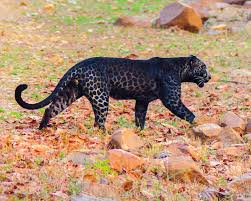
Black leopards also known as black panthers are found in dense, wet forested areas of India and southwest Asia.


Week 36 of 2026

  Had a good night, slept well and was up at 4.30am, took a while to get going but I did. Tim and I went out this morning he went to see i...