
Time for me to do the post with links to other posts.
https://jamfn.blogspot.com/2025/05/tuesdays-4-and-daylight.html
https://jamfn.blogspot.com/2025/05/getting-to-know-me_17.html
https://jamfn.blogspot.com/2025/05/a-busy-hodgepodge.html
Time for me to do the post with links to other posts.
https://jamfn.blogspot.com/2025/05/tuesdays-4-and-daylight.html
https://jamfn.blogspot.com/2025/05/getting-to-know-me_17.html
https://jamfn.blogspot.com/2025/05/a-busy-hodgepodge.html

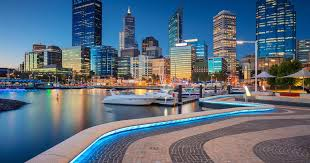
This week we are looking at the last of Australia’s capital cities
and that city is Perth, capital of Western Australia. It sits where the Swan
River meets the southwest coast. Sandy beaches line its suburbs, and the huge,
riverside Kings Park and Botanic Garden on Mount Eliza offer sweeping views of
the city. The Perth Cultural Centre houses the state ballet and opera companies,
and occupies its own central precinct, including a theatre, library and the Art
Gallery of Western Australia.
It was named after the Scottish city of Perth. The
name was chosen by Governor Charles Fremantle, who was instructed by the
British Secretary for the Colonies, Sir George Murray, who was a native of
Perthshire, Scotland.
It was founded by Captain James Stirling as the capital of the Swan River Colony in 1829. It was the first free-settler colony in Australia established by private capital. From 1850, convicts began to arrive at the colony in large numbers to build roads and other public infrastructure.

The Traditional Owners of Perth are the Whadjuk Nyoongar
people. They are part of the larger Noongar nation and have been the
custodians of the land and waters for at least 45,000 years. The town recognizes
the Whadjuk people as the Traditional Owners.

The river is a sacred place for Nyoongar peoples and they
preserved many stories of the Waugal, a water-serpent understood to be
responsible for the creation and maintenance of the river and most of the water
features around Perth. The Nyoongar peoples moved with the seasons, travelling
inland in winter, then returning in late spring to capture game such as
wallabies, kangaroos and possums. A main camp site was at what is now known as
Kings Park (Mooro Kaarta). Aboriginal peoples also frequented the mud flats
(Matagarup) which later became Heirisson Island as it was a productive fishing
spot.
The Nyoongar peoples had contact with various seafaring visitors
including the Dutch and the French before the arrival of Captain James Stirling
who colonised the region for the British in 1829. Relations between the
settlers and the Aboriginal peoples were not always harmonious as the latter
were dispossessed of their land and subjected to sometimes harsh and
unsympathetic colonial rule. Fast forward to December 2009 when the State
Government signed a framework agreement with the representative body, the South
West Aboriginal and Land and Sea Council, aimed at resolving through
negotiation six Nyoongar Native Title claims over Perth and the south-west of
Western Australia. The city is working closely with its Aboriginal community to
deliver 71 actions in the City’s Reflect Reconciliation Action Plan which aim
to build respect, relationships and opportunity with the Aboriginal and Torres
Strait Islander communities.

Since water transport was vital to communications in the new
colony before roads were built, the meanderings of the Swan River determined
the site of the first towns. Governor Stirling decided that the site for the
colony’s capital would be sited on the river 18km from the sea port of
Fremantle. On 12 August 1829 Mrs Helen Dance, wife of the commander of HMS
Sulphur, drove an axe into a tree (near the current Perth Town Hall) to mark
the colony’s foundation.
The city site was mid-way between the sea and the farming areas of the Upper
Swan. However, the early years were difficult financially for the colony and in
1850 it was decided that convict labour would be beneficial in that regard.
Between 1850 and 1868 almost 10,000 convicts were transported from Britain. Due
to the influx of convicts, many public works were completed during the period
from 1856-79, notably the Perth Town Hall. It was not until 1856 that Perth
officially gained ‘city’ status when it was declared a Bishop’s See by Queen
Victoria.
The first meeting of the Perth City Council was held on 10 December 1858. Rich
gold discoveries in the Kalgoorlie region in the early 1890s brought a new era
of prosperity for the city and many impressive buildings, some of which still
grace the streets to this day. The city also experienced significant population
growth. Representative government evolved in Western Australia in the second
half of the 19th Century and in 1901 Western Australia federated with the other
Australian States to form the Commonwealth of Australia. Perth experienced
another mining boom in the 1960s and the wealth it generated could be evidenced
by the city’s changing CBD skyline.

The City of Perth is the fastest growing local government area
with a population approaching 20,000. It has ranked consistently among the Top
10 most liveable cities in the world, as surveyed by the highly regarded The
Economist Intelligence Unit. Once again, wealth generated by the State’s
natural resources is driving development of the city, with the difference being
that many companies and businesses are choosing to make Perth their home.

This week’s hooved animal is the rhinoceros or rhino the word rhinoceros is a combination of two Greek words – rhino (nose) and ceros (horn).
There are five living species of rhinoceros – white, black, greater one-horned,
Javan and Sumatran. In addition, a number of other animals have rhinoceros as
part of their names, including the rhinoceros auklet, rhinoceros beetle,
rhinoceros chameleon, rhinoceros cockroach, rhinoceros fish, rhinoceros
hornbill, rhinoceros iguana, rhinoceros rat snake, rhino shrimp, and rhinoceros
viper. All of them have horn-like appendages on their noses.

They can be found in several countries across both Africa and
Asia. In Africa, you can find them in Angola, Botswana, Kenya,
Malawi, Mozambique, Namibia, South Africa, Tanzania, Uganda, Zambia, and
Zimbabwe. In Asia, they can be found in India, Indonesia, Nepal, and
Vietnam.
The two main species of rhino in Africa are the black rhino and
the white rhino. Black rhinos are found in 12 African countries, with the
largest populations in Namibia, South Africa, Kenya, and Zimbabwe. White
rhinos are found in 11 African countries.
Asia is home to the greater one-horned rhino, Javan rhino, and
Sumatran rhino. You can find them in India, Indonesia, Nepal, and
Vietnam.
A rhino’s horn is not attached to its skull. It is actually a
compacted mass of hairs that continues to grow throughout the animal’s
lifetime, just like our own hair and nails. The longest horn on record belonged
to a white rhino and measured just under 152cm or 60 inches, which is five feet,
and I am only four foot eleven inches tall.
The rhinoceros's closest living relative is the
tapir. Horses and zebras are also related, but less closely than
tapirs. All three belong to the group of odd-toed ungulates, known as
Perissodactyla. Really horses and zebras that sounds weird.
The white rhino’s name comes from the Afrikaans word “wyd,”
which means “wide” and describes its mouth. Early English settlers in South
Africa misinterpreted the “wyd” for “white”. Black rhinos may have received
their name from the dark wet mud in their wallows that made them appear black
in colour. Both species are gray in colour, the famous Blue Rhino, corporate
logo for the well-known propane tank company, is entirely a figment of its
founder’s imagination.
After mating, adult male and female rhinos typically go their
separate ways. After the calf is born, it will spend a couple of years or more
in the company of its mother, and perhaps associate with other females and
their calves, but the father rhino is not part of the standard social group.
They are not generally considered friendly to humans,
although they are not inherently aggressive. They prefer to be just left
alone and will only charge if they feel threatened or are protecting their
young. Female rhinos, especially those with calves, can be particularly
dangerous in the wild. While they may not intentionally seek to harm
humans, their size and power make them a serious threat if they do charge.
The live anywhere between 35 and 50yrs depending on the breed.
All five species of rhinos are herbivores, eating mainly
vegetation. They spend most of their time browsing and grazing through their
natural habitat in search of plants and grasses to eat.

It has a long history, and this may be a three-post country because
of that. It was founded way back around the year 862.

Russia, the largest country in the world, occupies one-tenth of
all the land on Earth. It spans 11 time zones across two continents (Europe and
Asia) and has coasts on three oceans (the Atlantic, Pacific, and Arctic).


Russia is part of two continents, Europe and Asia and of course
the language is Russian.

The currency is the Russian ruble, issued by The Central Bank of the Russian Federation, notes are issued in denominations ranging from 5 to 5,000 rubles. The obverse of the banknotes is adorned with images of structures and monuments, including a bridge over the Yenisey River in Krasnoyarsk, the Bolshoi Theatre building in Moscow, a monument to Peter the Great in Arkhangelsk pictured in front of a sailing vessel. Coins are denominated in values from 1 to 50 kopecks, and there are also coins ranging in value from 1 to 25 rubles.

The flag is a tricolour with three equal horizontal bands
of white, blue, and red. The white stripe symbolizes nobility and honesty,
the blue stripe represents love and loyalty, and the red stripe signifies
courage and love. This flag was first adopted in 1696 as an ensign for
merchant ships under the Tsardom of Russia.
The symbolism of the flag is this.
White: Represents nobility and
honesty.
Blue: Represents love, loyalty, and
faith.
Red: Symbolizes courage, love, and
sacrifice.
The flag was first adopted in 1696 as an ensign for merchant
ships under the Tsardom of Russia. It was later adopted as the national
flag in 1993.

Religion plays a prominent role in the public and spiritual life
of today's Russia. The majority of believers belong to the Orthodox
Christian denomination. Russia adopted Christianity under Prince Vladimir of
Kiev in 988, in a ceremony patterned on Byzantine rites.
The constitution recognises the right to freedom of conscience
and creed, but it also acknowledges the special role of the Russian Orthodox
Church in the country's history and culture. While the Russian Orthodox
Church is the largest religious denomination in Russia, it does not have
the status of an official state religion. The law recognizes Christianity,
Islam, Judaism, and Buddhism as "traditional" religions in the
country.
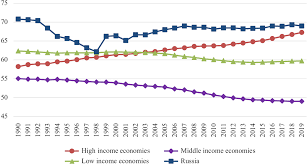
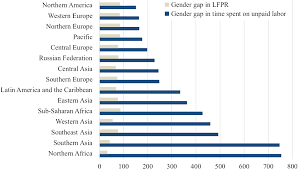
In theory, Russian women have equal rights with men as
guaranteed by the Constitution. However, in practice, significant
inequalities persist, particularly in the workplace and in areas like domestic
violence and reproductive rights. While the constitution mandates
equality, women face discrimination and societal expectations that prioritize
motherhood over professional development.
While domestic violence is illegal, many forms were
decriminalized in 2017, and support groups for victims have been labelled as
"foreign agents".
There are ongoing efforts to limit abortion access and
potentially introduce mandatory counselling and husband's consent for abortions.
Women in Russia have been able to vote since either 1917 or 1918
depending on site you look it up on.
Well tha’s enough for this post more next week.

I had another good night slept all night waking
only once to pee at 1am.
Kathy rang me this morning to wish me a happy
Mother’s Day.
It is raining this morning; it has rained all day
and has been a cold day.
I have felt sad a lot of the day, Jess brought
over more Mother’s Day gifts for me, shop bought slippers and a crochet bag for
my feet and lower legs.
Steps:6070= 3.4km’s
BGL6.6
I slept for 9hrs & 10mins according to my
watch and was awake for only 8mins during the night.
BGL:6.5
Jess came over to drop her work shirts for me to
wash, she said she was very tired and just wanted to go to bed but she has to
drive Sam to Tafe.
Sue rang around 9.30 to let me know her glasses
are in and ask if I would like to go with her to pick them up, so I did.
It has rained on and off all day.
Steps:6,728=3.9km’s
I slept for 7hrs and 32mins and was awake for only
7mins according to my watch.
I did a load of washing and hung it out.
I forgot that Sam wasn’t going to school today as it
is the sports carnival.
It is a cold day but mostly a dry day.
This afternoon I am feeling sad and don’t know why, I
feel life is so damn hard right now.
I am feeling extremely tired this arvo.
Steps:7712=4.5km’s
I slept for 11hrs and 10-mins and was awake for
29-mins during the night. In fact, I was in bed by 6.35 and pretty much fell
straight asleep and slept straight through the night.
I am coughing and sneezing a lot this morning and
suddenly around 6.45 started to feel really cold. The temp was 15C
By midday it had warmed up to 22C and I had to
take my long sleeve singlet.
Steps: 5635=2.98km’s
BGL: 7.0
I slept well, I did wake a couple of times to pee but straight back
to sleep. I slept for 6hrs and 59mins and was awake for 24mins during the night.
I started to ride the scooter up to wait with Sam for her transport
to arrive but while I was stopped out the front of Jess’s it started to rain so
I came back and swapped to the walker. I was waiting for Sam to join me and had
my back against the letter boxes, well Sam came up behind me and when she
touched my shoulders I screamed. I was recording a text for Sue and had to
assure her I was ok due to the screaming.
After I got back it started to piss down raining and rained most
of the day.
I mopped the laundry, kitchen and bathroom floors. I also
changed the sheets.
Sue went to have her tyre looked at and while she was at the
tyre place the road out the front flooded, one small red car was nearly covered
in water. To leave she had to drive down the footpath, but she managed it.
Tim rang at 5pm to let me know he will be late due to the
traffic. As it turned out he was 30-mins late.
BGL:5.8
Steps:7,575= 4.61Km’s
I slept well, 6hrs
and 14mins and I was awake for 14mins during the night.
I woke feeling sick
in the gut, but that improved after I ate. I also woke to rain.
It has rained on and
off all day, Sue came and took me to do some shopping. Thankfully it wasn’t
raining when I went to meet Sam this arvo.
Sue said the bras I bought
her from Temu fitted well and she is happy with them.
Tim has conjunctivitis
in one eye, he said he will see if he can see a pharmacist tomorrow and get
some drops for it.
BGL: 5.8
Steps: 9,033=5.59km’s
I slept well, 7hrs & 4min and I
was awake for 23mins during the night. It is a cold morning had to get a jacket
on as well as turn the heater on, thankfully only needed it on for an hour.
It has been fine all day no rain at
all.
Tim rang to let me know he will be
late.
When Jess got home from work, she
brought over her work shirt for me to wash and to the cleaned re-ironed shirt
home with her.
Steps: 8,244=5.13kms
BGL: 6.2


Hello Thursday, hello friends, time for me to post links to new
blog posts.
https://jamfn.blogspot.com/2025/05/getting-to-know-me_13.html
https://jamfn.blogspot.com/2025/05/a-curious-hodgepodge.html
https://jamfn.blogspot.com/2025/05/tuesday-4-living-here.html
https://jamfn.blogspot.com/2025/05/sister-you-are-always-in-my-heart.html
Today I am looking at asthma, a long-term condition that affects the airways in our lungs. Inflammation and tightening of the muscles ar...


